Macy’s scales advanced supply chain forecasting as retailer pushes toward 2026 efficiency goals


Macy’s is transitioning its sophisticated inventory forecasting technology from a controlled pilot phase to a broader, enterprise-wide implementation, marking a pivotal step in its ongoing multi-year transformation strategy. The move, announced in September 2026, is designed to bolster in-stock availability while simultaneously driving significant operational efficiencies across the retailer’s national footprint. This deployment represents the latest milestone in the company’s "Bold New Chapter" initiative, a comprehensive restructuring plan that aims to streamline logistics, optimize capital allocation, and revitalize the shopping experience through technological integration.
The Strategic Foundation: A Bold New Chapter
The "Bold New Chapter" plan, unveiled by Macy’s leadership in early 2024, serves as the primary roadmap for the retailer’s fiscal and operational recovery. At its core, the strategy recognizes that legacy supply chain models are no longer sufficient to meet the volatile demands of modern e-commerce and omnichannel retail. By aggressively targeting $235 million in cumulative savings by the end of 2026, Macy’s has sought to trim the fat from its distribution networks while reinvesting in high-growth, automated infrastructure.

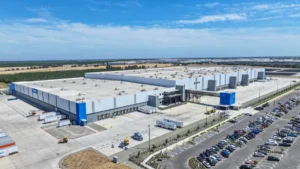
A major component of this plan involved the strategic consolidation of regional fulfillment assets. Throughout 2025 and 2026, the company systematically closed underperforming, legacy distribution centers—such as the facility in Tulsa, Oklahoma—that were identified as bottlenecks in the broader fulfillment ecosystem. In their place, Macy’s has brought online advanced, high-velocity automated facilities, including a flagship distribution hub in North Carolina. These newer sites are engineered for higher throughput and reduced labor intensity, allowing the retailer to pivot away from manual, time-consuming sorting processes in favor of data-driven, automated product routing.
Inventory Dynamics and Seasonal Readiness
As the retailer moves into the final quarter of the 2026 fiscal year, leadership remains optimistic about current inventory levels. During the most recent earnings call, management noted that inventory was up approximately 2.5% in the second quarter, a figure that aligns closely with the company’s reported sales growth. This equilibrium is a direct result of the more precise demand-forecasting tools now being integrated into the supply chain.
By effectively aligning stock levels with sales velocity, Macy’s is attempting to avoid the common retail pitfall of overstocking low-demand items while suffering from stockouts on high-velocity SKUs. This balance is critical for protecting gross margins, particularly during the high-stakes holiday shopping season. With the transition from pilot to broader implementation, the retailer expects these forecasting efficiencies to manifest clearly in the second half of 2026, providing a much-needed tailwind to profitability.

Industry Trends: The Race to AI-Driven Logistics
Macy’s is by no means operating in a vacuum. The broader retail sector is currently undergoing a radical, technology-led transformation in inventory management, with major competitors aggressively experimenting with artificial intelligence, machine learning, and advanced predictive analytics.
Target, for instance, has become a bellwether for this trend, having invested heavily in "digital twin" technology. By creating virtual replicas of its middle-mile inventory positioning systems, Target can simulate various supply chain scenarios, allowing it to predict and mitigate disruptions before they impact store shelves. This level of digital modeling has set a new industry benchmark, forcing competitors to accelerate their own internal roadmaps for technological adoption.
Similarly, Lowe’s has sought to unify its replenishment and inventory planning through a long-term partnership with Relex Solutions. By leveraging AI to analyze hyper-local demand trends, the home improvement giant aims to minimize shelf-space inefficiencies. Kohl’s, meanwhile, has focused on a more granular approach to inventory depth, adjusting its allocation strategy to ensure that seasonal receipts transition more smoothly through the store network. These collective moves suggest that the retail industry is entering a new era where competitive advantage is derived not just from product selection, but from the logistical precision of the supply chain itself.

Chronology of the Transformation
The progression of Macy’s recent supply chain initiatives highlights a deliberate, phased approach to modernization:
- Early 2024: Macy’s announces its "Bold New Chapter" strategy, setting a clear objective for $235 million in supply chain savings by 2026.
- Mid-2024: Initiation of the portfolio review, leading to the identification of legacy fulfillment centers for closure.
- Early 2025: The opening of the state-of-the-art, automated distribution center in North Carolina, serving as the prototype for future facility upgrades.
- Late 2025 – Early 2026: Launch of the pilot program for advanced forecasting and predictive inventory allocation.
- September 2026: Official transition of the forecasting technology from a limited pilot to a broader enterprise implementation.
Financial Implications and Operational Realities
The financial rationale for these changes is anchored in the protection of gross margins. As retail operating costs—including labor, fuel, and transportation—continue to fluctuate, retailers are increasingly forced to find internal efficiencies to offset these pressures. For Macy’s, the goal is to decouple sales growth from rising logistical costs.
By utilizing machine learning to better predict localized demand, the company reduces the need for costly cross-country freight transfers and markdown-heavy inventory liquidations. If the forecasting system successfully optimizes inventory distribution, the capital previously tied up in excess or misplaced stock can be reallocated to other areas of the business, such as digital platform upgrades or store experience enhancements.

The Road Ahead: Challenges and Opportunities
While the transition to automated forecasting presents a clear path toward improved operational metrics, it is not without challenges. Integrating new software into legacy ERP (Enterprise Resource Planning) systems often requires significant technical oversight and change management. Furthermore, the accuracy of AI models is inherently dependent on the quality of historical data. As the retailer shifts from a pilot to a full-scale rollout, the ability to maintain data integrity across hundreds of locations will be the ultimate test of the system’s viability.
Management remains confident, however, that the long-term benefits outweigh these integration hurdles. As noted by executives, the successful execution of these initiatives is expected to drive not only cost reductions but also a superior customer experience. When products are available exactly where and when they are needed, the retailer reduces friction, increases brand loyalty, and stabilizes its competitive position against both traditional rivals and pure-play digital marketplaces.
Looking further ahead, the successful deployment of this forecasting infrastructure positions Macy’s to scale its omnichannel capabilities further. By treating the supply chain as a flexible, data-responsive asset rather than a rigid set of warehouse operations, the company is effectively future-proofing its business model against the next wave of retail disruption. As 2026 closes and the company looks toward 2027, the focus will likely remain on refining these digital tools, extracting further value from its consolidated distribution network, and maintaining the disciplined inventory posture that has defined the most recent fiscal quarters. The transformation is, in effect, a transition from reactive retail to proactive, data-driven commerce.